Loading...
Serving Deer Park, TX and surrounding areas. (346) 954-2701
A pool deck in Deer Park needs to drain well, hold up in clay soil, and stay comfortable underfoot in July. We permit every project, design the drainage, and build it to last.
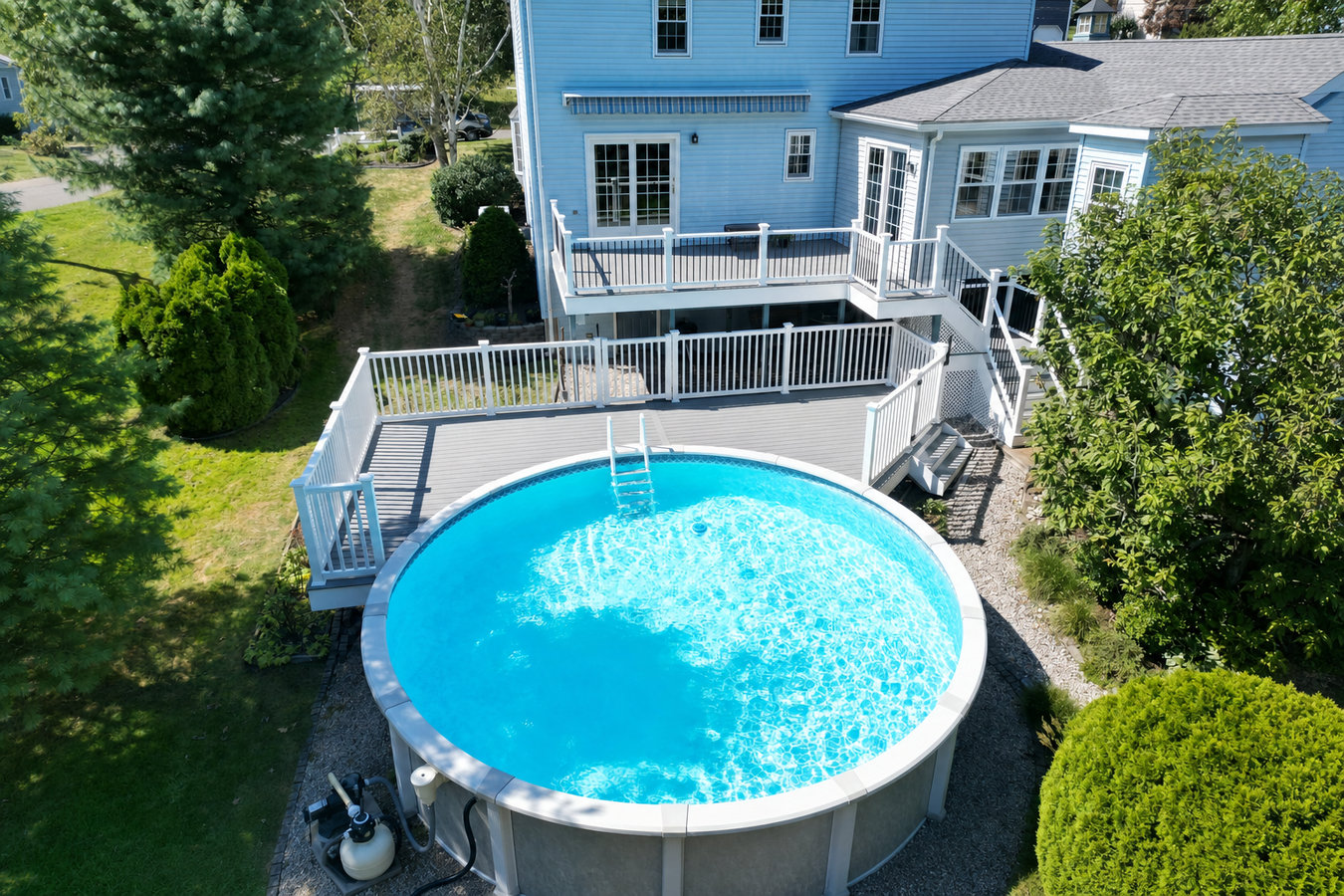
Pool deck construction in Deer Park involves grading, base preparation, permitting, and surface installation, most residential projects completed in three to seven days with permits pulled from the City of Deer Park before any work begins. The deck surrounds your pool, provides walking surface, and - if designed correctly - moves water away from the pool structure and your foundation every time it rains.
Most homeowners think about the look of a pool deck first and the drainage second. In Deer Park, that order gets expensive. Harris County is flat, the soil is slow to absorb water, and heavy rain events are common. A deck that was not built with drainage in mind will push standing water somewhere you do not want it. If you are also thinking about the yard around the pool, a custom deck design consultation lets us look at the whole space and plan the deck, drainage, and any connecting outdoor area together.
Cracks that have grown over time, or that have edges sitting at different heights, mean the deck has shifted from soil movement beneath it. In Deer Park, the clay soil expands and contracts with every rain-and-dry cycle, and older decks not built with control joints tend to crack and heave. Small surface cracks can sometimes be sealed, but cracks running all the way through the slab are a sign replacement is the right call.
If water pools on the deck after a storm and does not drain, the slope has either settled or was never built correctly. In a city like Deer Park, where heavy rain is common and the ground is already slow to absorb water, standing water is both a slip hazard and a threat to the pool's surrounding structure. This is one of the clearest signs a new deck with proper drainage is overdue.
Concrete that has been through years of Texas heat, UV, and pool chemicals will eventually break down on the surface - it may feel rough, look pitted, or have sections that flake when swept. A deteriorating surface is harder to keep clean and can harbor bacteria. If the damage is widespread rather than limited to one small area, replacement is usually the more cost-effective path.
If part of your deck sits lower than another, or if the edge near the pool has dropped away from the coping, the ground beneath has settled unevenly. This is common in Deer Park's clay-heavy soil, especially after a dry summer followed by heavy fall rains. A tilted deck can direct water toward the pool structure or your foundation, creating bigger problems down the road.
We build pool decks in broom-finished concrete, stamped and colored concrete, and concrete paver installations. Each material has trade- offs in cost, heat absorption, slip resistance, and long-term maintenance that are worth understanding before you commit. Broom- finished concrete is the most economical and holds up well if the base is properly prepared and control joints are placed correctly. Stamped concrete adds pattern and color but requires sealing on a regular cycle to keep the finish from fading. Pavers cost more upfront but allow individual units to be replaced if the soil shifts beneath one section - which is a real advantage in Harris County.
For homeowners who want the pool deck integrated into a larger outdoor living space, we also build vinyl fence enclosures around pool areas and can coordinate the full perimeter in a single project. Every pool deck we build is permitted through the City of Deer Park - no exceptions.
Most economical option - best for homeowners who want a durable, low-maintenance surface without decorative finishes.
Best for homeowners who want a custom look - patterns and colors applied during the pour, with sealing required every few years.
Best for homeowners in areas with active soil movement - individual units can be reset if one section settles without redoing the whole deck.
Deer Park sits on the same heavy clay soil that covers most of Harris County. This soil swells when it gets wet and shrinks when it dries - which means the ground under your pool deck is constantly moving, especially during the wet spring and dry summer cycle. A contractor who does not account for this with proper base compaction and control joint design will leave you with a cracked deck within a few years. The Harris County Flood Control District documents the drainage challenges throughout the county - the flat terrain means water has nowhere to go unless it is designed a path. Homeowners in Seabrook and Webster face the same conditions and the same permit requirements through their respective city building departments.
Surface temperature is the other major factor in this area. Deer Park averages more than 100 days per year above 90 degrees, and a plain concrete deck in direct sun can reach uncomfortable temperatures on bare feet by mid-morning in July. Textured finishes, paver gaps, and certain coatings help manage this - not as luxury options but as practical decisions for a surface people use barefoot all summer. The material you choose shapes how the deck feels in July, how much maintenance it needs, and how it holds up when the next dry summer follows a wet spring.
We ask a few basic questions - pool size, whether there is an existing deck, and what look you are going for. Then we come out, measure the area, look at drainage and soil conditions, and give you a written estimate. We respond within 1 business day.
After you sign the contract, we apply for the required permit from the City of Deer Park. This typically takes a few business days to a couple of weeks. No work begins until the permit is in hand - that is not optional.
The crew removes any existing deck material, grades the soil so it slopes away from the pool, and compacts the base. This is the most disruptive part of the project. Old material is hauled away - confirm this is included in your contract before signing.
We pour, form, or set the surface, allow proper curing time, and schedule the city inspection. After the inspector signs off, we walk you through the drainage direction, maintenance steps, and when to apply a sealer if needed.
Free on-site estimate and written quote. We permit every project through the City of Deer Park - no shortcuts.
(346) 954-2701We pull the permit from the City of Deer Park before any work begins and have the finished deck inspected before we consider the job done. You get official documentation that the work was done to code - which protects you when you sell the home or need to make an insurance claim.
We compact the subgrade, place control joints at the right intervals, and slope the deck away from the pool and your foundation. These steps are not extras - they are what keeps a concrete deck from cracking and heaving within a few years in Deer Park's soil.
Drainage is built into the design of every pool deck we install. In a flat, low-lying area like Deer Park, water that has nowhere to go will find its way to your foundation. We design the slope and any necessary drainage before the first form is set.
The Pool and Hot Tub Alliance publishes safety and installation guidelines for pool deck surfaces. We apply those standards alongside our firsthand knowledge of what holds up in this specific climate.
Pool deck construction in Deer Park is permit work - every project goes through the city's process. We have handled that process for homeowners throughout Harris County since 2016 and know what the inspectors look for.
Pool perimeter fencing that meets safety requirements and holds up without painting or staining.
Learn MoreFull outdoor living space planning that integrates the pool deck into a connected backyard layout.
Learn MorePermit slots and crew schedules fill fast in spring. Call Deer Park Fence & Deck now for a free on-site estimate - no obligation, just honest numbers and a clear plan.